Modern high-rise buildings require dependable access equipment for cleaning, inspection, repair, and facade maintenance. A building maintenance unit (BMU) Singapore system gives trained maintenance teams controlled access to exterior building surfaces, helping them perform essential work at considerable heights.
High-rise properties often feature glass curtain walls, architectural cladding, recessed sections, large windows, and complex facade designs. Routine cleaning alone can require access to extensive exterior areas. Repair work, glass replacement, inspection tasks, painting, and structural assessments can create additional access requirements.
A properly planned building maintenance unit (BMU) Singapore solution can address these requirements through permanent facade access equipment designed around a building’s structure and maintenance needs.
Groxx Gears provides high-rise safety and building maintenance solutions, with a product focus that includes fall protection systems, rigging equipment, industrial hardware, and suspended access solutions. Its building maintenance offering covers facade cleaning, glass replacement, and structural inspection applications.
What Is a Building Maintenance Unit (BMU)?
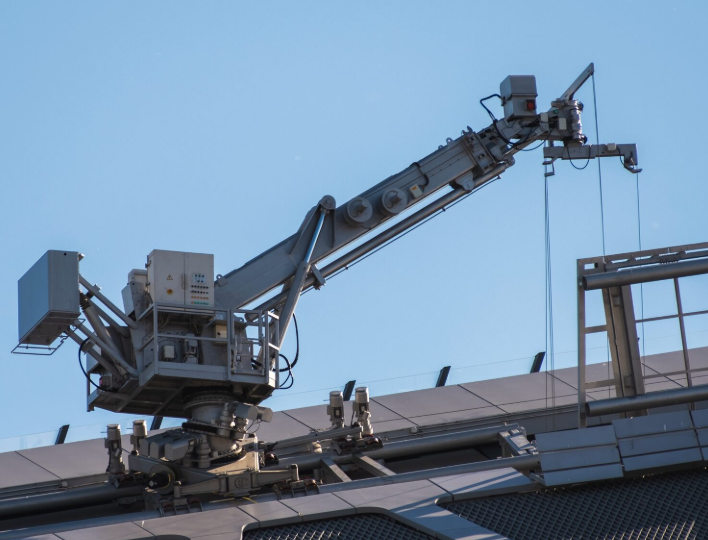
A building maintenance unit, commonly called a BMU, is a permanent mechanical access system designed to help trained personnel reach exterior areas of high-rise buildings.
A typical building maintenance unit (BMU) Singapore setup may include roof-mounted equipment, a suspended platform or cradle, lifting mechanisms, control systems, suspension components, and safety features. System configurations vary according to building design and project requirements.
Unlike temporary access arrangements, a permanent BMU can form part of a building’s long-term facade maintenance strategy. Its design may account for the building’s height, facade geometry, required working positions, maintenance tasks, platform capacity, and available structural support.
This makes BMU planning a project-specific task. A system suitable for one tower may not provide adequate coverage or movement for another building.
For property owners and facility managers, the main objective is straightforward: provide practical and controlled access to exterior surfaces while supporting safe maintenance operations.
How Does a BMU System Work?
A building maintenance unit (BMU) Singapore system generally combines several mechanical elements that allow a suspended platform to reach designated facade areas.
Roof-Mounted Equipment
Many BMU arrangements use equipment positioned at roof level or another elevated location. The equipment must have suitable structural support and sufficient reach for its intended service areas.
Roof layout, parapets, plant rooms, architectural features, and available structural points can affect the system configuration. Early coordination between architects, engineers, building owners, and access-system specialists can help identify practical installation requirements.
Suspended Working Platform
A suspended platform provides a working area for trained personnel performing facade-related tasks. Depending on system design, the platform may move vertically along the building exterior.
The platform should be suitable for its intended operating conditions and rated load. Planned activities should account for workers, tools, approved equipment, and other relevant loads.
Horizontal Movement
Some BMU systems can travel across designated roof tracks or movement paths, allowing access to different sections of a facade.
This capability can be particularly useful for buildings with broad facades or multiple maintenance zones. Proper system design helps ensure that required areas can be reached without creating unnecessary operational complications.
Control and Safety Systems
BMU equipment relies on controlled operation and appropriate safety mechanisms. Operators should follow manufacturer instructions, building procedures, and applicable workplace safety requirements.
Equipment inspection, preventive maintenance, operator training, and appropriate emergency procedures also form part of responsible BMU operation.
Where Are BMU Systems Used?
A building maintenance unit (BMU) Singapore system can support several types of exterior building work.
Facade Cleaning
Regular cleaning helps maintain the appearance and condition of glass, cladding, external walls, windows, and other facade surfaces.
High-rise buildings can have extensive exterior areas that are difficult to reach from ground level. A permanent facade access system provides a practical method for reaching designated sections during scheduled cleaning work.
Glass Replacement and Facade Repairs
Exterior glazing may eventually require replacement because of damage, wear, defects, or renovation requirements.
A BMU can provide controlled access to the work area, allowing trained teams to perform approved repair or replacement tasks from a suitable working position.
Structural and Facade Inspections
Regular inspection can help building teams identify visible defects and maintenance requirements.
A suspended access platform can allow qualified personnel to inspect accessible facade sections, joints, finishes, glazing, cladding, and other exterior elements.
Painting and Surface Maintenance
External painting, coating work, surface treatment, and repair projects may also require elevated facade access.
A suitable building maintenance unit (BMU) Singapore arrangement can provide access across planned work zones, subject to the equipment’s design, capacity, and approved operating procedures.
Long-Term Building Maintenance
BMUs should not be viewed only as equipment for occasional cleaning. They can form part of a building’s broader long-term maintenance strategy.
Property teams can consider expected facade cleaning schedules, inspection requirements, repair work, future renovation projects, and access requirements when planning a system.
Why BMU Systems Matter for High-Rise Buildings Singapore
Singapore has a substantial number of high-rise commercial, residential, hospitality, and mixed-use properties. Many of these buildings feature large glazed surfaces and architectural facades that require recurring maintenance.
Height creates a practical challenge for exterior maintenance. Ground-level access is often insufficient, while temporary access methods may not suit every building or maintenance schedule.
A building maintenance unit (BMU) Singapore system can provide permanent access to designated facade areas, helping maintenance teams plan recurring work around a building’s specific design.
System selection should consider more than building height alone. Facade geometry, horizontal coverage, platform movement, structural provisions, working loads, environmental conditions, and maintenance activities all deserve attention.
Groxx Gears’ building maintenance solutions are positioned around suspended access applications such as facade cleaning, glass replacement, and structural inspections.
Key Factors When Choosing a Building Maintenance Unit (BMU) Singapore
Selecting a building maintenance unit (BMU) Singapore system requires careful assessment of the property and its planned maintenance activities.
Building Height and Facade Geometry
Building dimensions are only part of the equation. Facade geometry can affect how equipment reaches different surfaces.
Curved walls, recessed sections, setbacks, projections, terraces, architectural features, and varying facade profiles may require specific movement capabilities or system arrangements.
A detailed access assessment can help determine which areas need routine servicing and which equipment configuration can provide suitable coverage.
Coverage Requirements
Property owners should identify every facade zone that requires routine access.
Questions may include:
- Which surfaces require regular cleaning?
- Which sections require periodic inspection?
- Where might glass replacement be required?
- Which facade areas require repair or painting?
- Can the proposed equipment reach each required location?
A system should be evaluated against actual maintenance routes rather than a generic building profile.
Working Load and Equipment Capacity
Platform capacity must correspond with approved operating requirements.
Planning should account for workers, tools, materials, and other permitted loads. Exceeding equipment limits can create serious safety and operational concerns.
Technical specifications should always be reviewed with qualified professionals before equipment selection or operation.
Structural Compatibility
A BMU may require dedicated structural provisions for mounting, tracking, support, or equipment loads.
Structural coordination should take place during building design or before retrofit work begins. Engineers and qualified specialists can assess whether existing structures provide suitable support or whether modifications are required.
Operating Environment
Singapore’s tropical climate creates exposure to heat, humidity, rainfall, and changing weather conditions.
Equipment selected for exterior building maintenance should be appropriate for its operating environment. Material selection, protective finishes, mechanical durability, inspection requirements, and preventive maintenance all matter for long-term performance.
Safety and Emergency Provisions
Safety features vary according to system design. A building maintenance unit (BMU) Singapore project should account for suitable emergency procedures, mechanical safeguards, control systems, and worker protection measures.
Training and competent operation remain essential. Equipment should never be treated as a substitute for proper work-at-height planning.
Serviceability and Maintenance
A BMU is a long-term building asset. Property teams should consider maintenance requirements before purchase or installation.
Questions worth asking include:
- Who will inspect the system?
- Who will provide technical servicing?
- What components require routine inspection?
- What spare parts may be needed?
- How will maintenance records be managed?
- What procedures apply after equipment faults or prolonged periods without use?
A strong maintenance plan can support reliable equipment performance across its service life.
BMU Safety: What Building Owners and Facility Managers Should Consider
A building maintenance unit (BMU) Singapore system can support controlled facade access, but safe operation depends on more than mechanical equipment.
Operators should receive suitable training and understand the equipment’s operating procedures. Pre-use checks should be completed according to manufacturer requirements and site procedures.
Maintenance teams should also monitor relevant components and safety devices. Depending on the system, inspection may involve suspension components, cables, mechanical mechanisms, controls, structural connections, and emergency systems.
Scheduled examinations and preventive maintenance can help identify issues before they affect planned operations.
Facility managers should also coordinate BMU operations with other work-at-height systems. Site conditions, weather, facade activity, public areas, exclusion zones, and other contractors may affect how access work should be planned.
Applicable Singapore workplace safety requirements and manufacturer instructions should guide actual operation, inspection, and maintenance procedures.
BMU Systems and Fall Protection: How They Work Together
Facade access equipment and fall protection equipment serve different purposes.
A building maintenance unit (BMU) Singapore system primarily provides a means of reaching exterior building surfaces. Fall protection equipment helps protect workers against falls where exposure exists and where the relevant system is required.
Depending on building design and work activity, a project may require additional systems such as fall arrest anchors, horizontal lifelines, vertical lifelines, or other suitable protective equipment.
Groxx Gears has a broader focus on fall protection systems and high-rise safety equipment alongside building maintenance solutions. This allows building teams to consider facade access and worker protection as related parts of a larger high-rise maintenance strategy.
Each project still requires its own technical assessment. A BMU configuration should not automatically be assumed to require the same fall protection arrangement as another property.
Why Engineering Quality Matters for BMU and High-Rise Access Equipment
High-rise access equipment operates within demanding environments where mechanical performance, structural compatibility, durability, and proper maintenance all matter.
Groxx Gears describes its wider industrial product approach around heavy-duty applications, high-strength alloys, advanced heat-treatment processes, precision manufacturing, CNC grinding, CNC hobbing, and tight tolerances.
These engineering capabilities form part of the company’s broader industrial positioning. For BMU projects, however, equipment specifications should always be evaluated against the exact building, application, approved load requirements, operating conditions, and relevant technical documentation.
Precision matters when equipment must perform reliably across demanding industrial applications. Proper design, manufacturing quality, installation, inspection, and servicing all contribute to a dependable building maintenance solution.
Why Consider Groxx Gears for Building Maintenance Solutions Singapore?
Groxx Gears provides heavy-duty industrial solutions focused on construction, maintenance, fall protection, rigging, and high-rise applications.
Its building maintenance offering addresses suspended access requirements for facade cleaning, glass replacement, and structural inspections.
For a building maintenance unit (BMU) Singapore project, property owners and facility teams can evaluate their requirements around several key areas:
- Building height
- Facade configuration
- Required access zones
- Cleaning requirements
- Inspection requirements
- Glass replacement needs
- Structural provisions
- Platform requirements
- Worker safety systems
- Maintenance and servicing requirements
Groxx Gears’ wider high-rise safety portfolio can also complement facade access planning through fall protection equipment, rigging gear, and other industrial safety solutions.
The right solution starts with a clear understanding of the building and its maintenance needs. A project-specific discussion can help identify access requirements before equipment selection proceeds.
BMU Planning: Questions to Ask Before Starting a Project
Before selecting a building maintenance unit (BMU) Singapore system, building owners and facility managers should review several practical questions.
What Areas Require Regular Access?
Map facade sections requiring cleaning, inspection, repair, painting, glazing work, or other maintenance.
How Tall Is the Building?
Overall height affects vertical travel requirements, equipment configuration, operating procedures, and project planning.
What Type of Facade Does the Building Have?
Glass curtain walls, cladding, concrete surfaces, architectural panels, and mixed facade systems can create different access requirements.
Does the Facade Have Complex Geometry?
Curves, setbacks, recesses, projections, and other architectural features may affect platform positioning and movement.
What Maintenance Tasks Will Workers Perform?
Cleaning may have different access requirements from glass replacement or facade repair. The equipment should match approved work activities.
What Working Load Is Required?
Consider workers, tools, approved materials, and other relevant loads before selecting equipment.
Where Can the BMU Be Positioned?
Roof space, structural support, plant areas, parapets, tracks, and access routes should be assessed during project planning.
What Fall Protection Systems Are Required?
Determine whether additional anchors, lifelines, or other protective systems are necessary for planned work activities.
Who Will Operate and Service the Equipment?
Identify competent personnel, training requirements, inspection responsibilities, maintenance arrangements, and technical support.
What Local Requirements Apply?
Review applicable Singapore workplace safety requirements, engineering requirements, manufacturer instructions, and project-specific procedures before operation.
Common Mistakes When Selecting a BMU
Choosing Equipment Without Assessing the Building
A generic system may not provide adequate coverage for a building with unusual facade geometry.
Project-specific assessment should guide system selection.
Focusing Only on Initial Cost
Purchase price is only one consideration. Owners should also evaluate servicing, maintenance, spare parts, inspections, downtime, expected service life, and operational requirements.
Ignoring Future Maintenance Needs
A building’s facade may require more than routine cleaning. Future inspection, glass replacement, repair, painting, renovation, and refurbishment should form part of access planning.
Treating Safety Equipment as an Afterthought
Work-at-height safety should be considered during project planning rather than added after access equipment has already been selected.
Neglecting Training and Maintenance
Even a well-designed building maintenance unit (BMU) Singapore system requires appropriate operation, inspection, maintenance, and servicing.
Building Maintenance Unit (BMU) Singapore: A Long-Term Investment for High-Rise Properties
A building maintenance unit (BMU) Singapore system can provide a permanent access solution for high-rise facade maintenance.
Its value extends beyond occasional window cleaning. A suitable BMU may support recurring facade cleaning, glass replacement, external repairs, inspections, painting, and other approved maintenance activities.
Successful system planning depends on several connected factors: building design, facade geometry, access coverage, structural support, working loads, operating conditions, worker protection, training, inspection, and maintenance.
Groxx Gears brings a high-rise safety and industrial equipment focus to building maintenance applications, with suspended access solutions designed for facade cleaning, glass replacement, and structural inspection requirements.
For property owners, developers, facility managers, and contractors, the best starting point is a clear assessment of the building’s access requirements. Once those requirements are established, suitable equipment can be evaluated around performance, safety, serviceability, and long-term operational needs.
Takeaway
A building maintenance unit (BMU) Singapore system provides controlled access for high-rise facade maintenance activities such as cleaning, inspection, repair, painting, and glass replacement.
Selecting suitable equipment requires attention to building height, facade geometry, coverage, structural provisions, platform capacity, operating conditions, safety systems, training, inspection, and maintenance.
BMU equipment should also be considered alongside appropriate fall protection measures where work-at-height exposure exists.
Groxx Gears offers building maintenance and high-rise safety solutions for demanding commercial and industrial applications, with suspended access capabilities covering facade cleaning, glass replacement, and structural inspection work.
For a building maintenance unit (BMU) Singapore requirement, building owners and facility teams can discuss their facade access needs with Groxx Gears and assess a solution suited to their property’s technical requirements.
Frequently Asked Questions
What is a building maintenance unit (BMU)?
A building maintenance unit is a permanent mechanical facade access system designed to help trained workers reach exterior sections of high-rise buildings for approved maintenance activities.
What is a building maintenance unit (BMU) Singapore system used for?
A building maintenance unit (BMU) Singapore system can support facade cleaning, glass replacement, structural and facade inspections, painting, repairs, and other approved external maintenance tasks.
Why do high-rise buildings need BMU systems?
High-rise facades can be difficult to reach from ground level. A permanent BMU can provide controlled access to designated exterior areas, supporting recurring maintenance work.
Is a BMU the same as scaffolding?
No. A BMU is generally a permanent building access system designed around the property’s facade and maintenance requirements. Scaffolding is typically assembled for specific projects and may have different access characteristics.
Does a BMU replace fall protection equipment?
Not necessarily. A BMU provides access, while fall protection equipment provides worker protection against fall hazards. Depending on project conditions, both may form part of a high-rise maintenance strategy.
What should be considered when selecting a BMU?
Important factors include building height, facade geometry, required coverage, structural support, working load, platform requirements, operating environment, safety features, training, inspection, and maintenance.
How often should a BMU be inspected?
Inspection requirements depend on applicable regulations, manufacturer instructions, equipment design, operating conditions, and the building’s maintenance program. Qualified personnel should determine appropriate inspection and servicing procedures.
Can BMUs support glass replacement?
Yes, suitable BMU systems may provide access for approved glass replacement activities. The equipment configuration and load requirements should be assessed according to the specific project and work method.
Can BMUs be used for facade inspections?
Yes. A suitable BMU can provide access for trained personnel performing approved facade and structural inspection tasks.
Where can businesses source building maintenance solutions Singapore?
Groxx Gears provides high-rise building maintenance and safety solutions, including suspended access applications for facade cleaning, glass replacement, and structural inspections.
Recommended CTA:
Planning a high-rise facade access project? Contact Groxx Gears to discuss your building maintenance unit (BMU) Singapore requirements and identify a suitable access solution for your property.